 The Melanated Skin Registry

IShe was shopping for a scanner
She was not looking for a partnership. She was looking for a skin scanner.
Carr knew she was opening her own practice and knew what she wanted in the room. She had been watching the category for a while and had ruled most of it out. The units were bulky and she did not have the space. They were expensive — $4,000 and up — for what she felt they delivered.
She also had a general wariness about how these devices were being demonstrated. Every example she came across had been shot on Fitzpatrick I through III, and she was not sure what to make of that.
She looked at several devices. She was scrolling TikTok one night, typing in skin analyzers, when a small handheld one came up — and what drew her to it was that it was compact, small enough to work in the room she was about to open.
She went to the company’s page, SmartSKN, and started working through the videos. One had gone viral. She opened the comments, because that is what everyone does.
What she found there was not estheticians excited about how the device might enhance their services or their businesses. It was fear.
The comments were estheticians and beauty professionals saying they would rather stick with how they were already working. That AI was going to take their jobs. That the whole thing was horrible.
Her reaction was not sympathy. It was irritation, and then it was research.
IIShe pitched them
Before she contacted anyone, she vetted the company. This is a habit, not a courtesy.
“Before I pitch myself to anybody, I need to do my research, because it’s my reputation on the line as well.”
She found nothing that disqualified them. So she found the customer service address, wrote in, introduced herself, listed her credentials, and told them what she had seen: a device that appeared to hold up, and a professional audience tearing it down without having touched it.
Val, the company’s owner, answered the next day. They met over video. Carr came in with more than a treatment room background — she had been teaching beauty professionals how to use AI for the unglamorous parts of the business, the marketing calendars and content planning that stall out when the mental capacity runs out. She calls it her assistant, with a small French flourish on the word, because it sounds fancier that way.
What she wanted from that first call was straightforward. She thought the device was good, she thought the professionals in the comments had it wrong, and she wanted to help Val get it in front of them properly.
It was in that conversation that she learned how the device performed on skin of color — the thing she had been unable to find out from any of the demo footage.
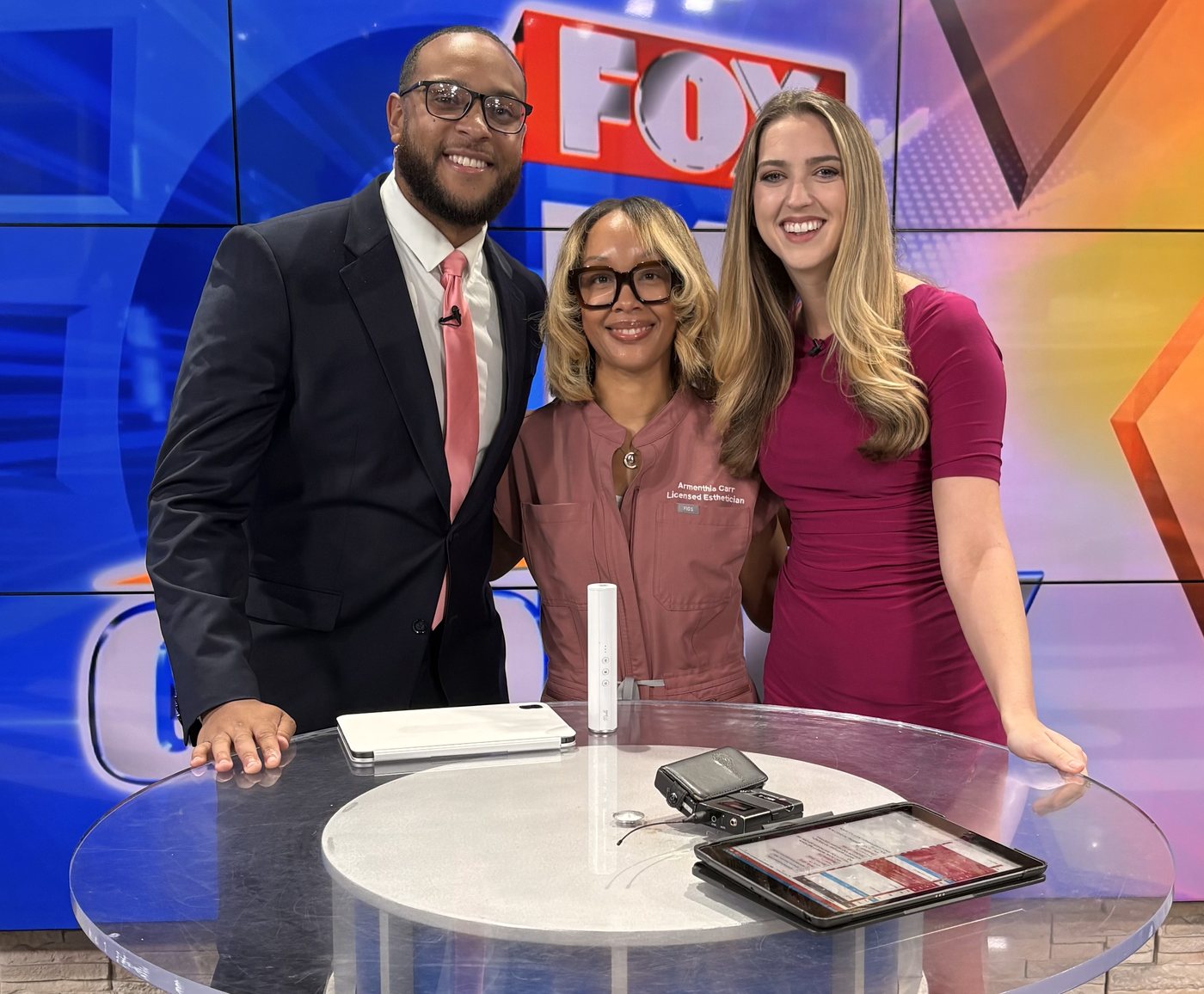
She demonstrated the device on the Orlando stage, where many estheticians expressed interest in adding it to their treatment rooms. She and Val continued working together afterward. Their business relationship grew, and Carr later became Director of Education for SmartSKN.
IIIThe scan that humbled her
The first face she scanned was her own, and she was confident about it. She thought her skin was immaculate — glass skin, in her own estimation.
The device disagreed. It reported low moisture. It reported sensitivity. It reported redness. It scored her blemishes at 99 out of 100. Under magnification she could see congestion across her forehead, her nose and her chin, pigmentation around her eye, and an ingrown hair on her chin she had not known was there.
“That device humbled me very quickly.”
The magnification is the mechanical difference. A standard mag lamp sits at 3, 5 or 7 diopters and throws a light bright enough that you warn the client before you swing it over. This runs at 60 times, and the client does not have to close their eyes, sit up, or put their face inside a dome.
IVReading melanin
Here is the part that matters most to this readership, and Carr raises it before she is asked.
Most sensors that claim to read skin do not register deep pigment reliably. It is a known limitation, and it was the first thing Carr wanted to know about any device going into her room.
The device did not flag her baseline melanin as a concern. Instead, it identified areas of hyperpigmentation and even revealed terminal hair she had not seen.
The device reports pigmentation and blemishes as separate scores. In Carr’s experience, the blemish score reflects visible inflammation, while the pigmentation score identifies areas of excess pigment rather than the overall depth of a client’s complexion.
Asked whether the device has ever mistaken a client’s deeper skin tone for hyperpigmentation or damage, Carr says no. After more than 100 scans, she has not seen it make that error.
That is Carr’s experience as a practitioner, not a manufacturer’s claim or a formal study. She began by testing whether the device’s readings matched what she observed in the treatment room, especially on skin of color.
VThe test she runs on herself
Carr does not look at the results while she works. She saves them for the end, deliberately, as a standing test of her own hands. She treats it as a challenge to herself: can she read the skin correctly before the device tells her?
She has been beaten once, and she volunteers it.
The client was a Fitzpatrick VI. Carr’s read, based on touch and on how the first cleanser absorbed, was that the skin might be slightly dehydrated but not badly — the client produced plenty of oil, felt no heat under her hands, reported no allergies and no sensitivity. She went in with a eucalyptus enzyme carrying no actives at all.
It burned.
“I was wrong. It was very, very dehydrated.”
The lesson she takes from it is not that the machine knows more than she does. It is that dehydration underneath oily, deeply pigmented skin is genuinely hard to feel. The skin gives an experienced practitioner every reason to believe it is hydrated. A moisture reading is not working from those cues, so it catches what the hands miss.
VIWhat the machine cannot do
The comment section she read said AI would replace estheticians. Her answer, now that she has run the scans, is more specific than a reassurance.
You still have to determine what is causing a particular client’s hyperpigmentation, she says. Even after the system processes the information, the practitioner decides how to proceed with the client’s facial and at-home care.
The device tells her a pigmentation score. It does not tell her whether that pigmentation is surface-level or driven by something underneath — inflammation, hormones, a barrier that has been compromised for months. That is the conversation, and the conversation is the job.
It shows up in her own case history. Her scan came back with sensitivity and redness both over 50 and blemishes at 99. She could not see the redness on her face, but she could feel it. That inflammation, she says, was the reason her hyperpigmentation had refused to move.
VIIWhat comes after the scan
The half of the system less visible from outside is what happens after the reading. The company sources ingredients from Korea and compounds to order — the client’s name goes on the bottle, like a compounding pharmacy rather than a shelf.
What Carr emphasizes is the sequencing logic, because it matches how she already worked before she had the device. The first thing the system looks at is the barrier. If the barrier is not balanced, it will not attempt to correct anything else.
She used her own formulation for four weeks. On week five, she rescanned: blemishes down from 99 to 17, pigmentation visibly reduced. The breakouts she had reliably gotten along her chin before every menstrual cycle stopped, and stayed stopped for months.
“The thing is, it’s not necessarily treating my acne. It’s treating what’s causing it, which was an overproduction of oil.”
VIIIThe part her clients see
The clinical case is one thing. Carr is equally direct that the device solved a communication problem that has dogged the profession for as long as she has been in it.
“In the past, we would tell a client, this is your skin. I’m telling you what I’m seeing.”
It is a bind every esthetician knows. The client cannot see what the practitioner sees, which means every recommendation arrives with a question attached: is this real, or is this an upsell?
Now she hands them the tablet. Congestion here. Blackheads there. The fine lines running across the magnified image are dehydration — something a client can see for themselves on the screen.
She says it has changed what clients agree to.
“I’m able to get them into series packages without them even asking the price.”
She is clear-eyed about what that means. A device that shows a client their own congestion is also a device that sells. She does not make the sale in the room.
“I haven’t had one person buy the skincare in front of me. They all go home and buy it. I tell them go home and research it. Look it up, look at the ingredients, make an educated purchase.”
IXWhat she teaches other professionals
Her current work with the company is mostly repair — not of devices, but of adoption. Practitioners were buying the scanner and then leaving it in a drawer.
Her focus became educating professionals on how to use the device effectively in the treatment room — not simply to complete a scan, but to help clients understand what they were seeing and make informed decisions about treatment series, packages and retail skincare.
The observation she keeps returning to is about schools.
“A lot of schools are not equipped with educators that can really teach somebody how to do a thorough consultation, because they don’t know what they’re looking at.”
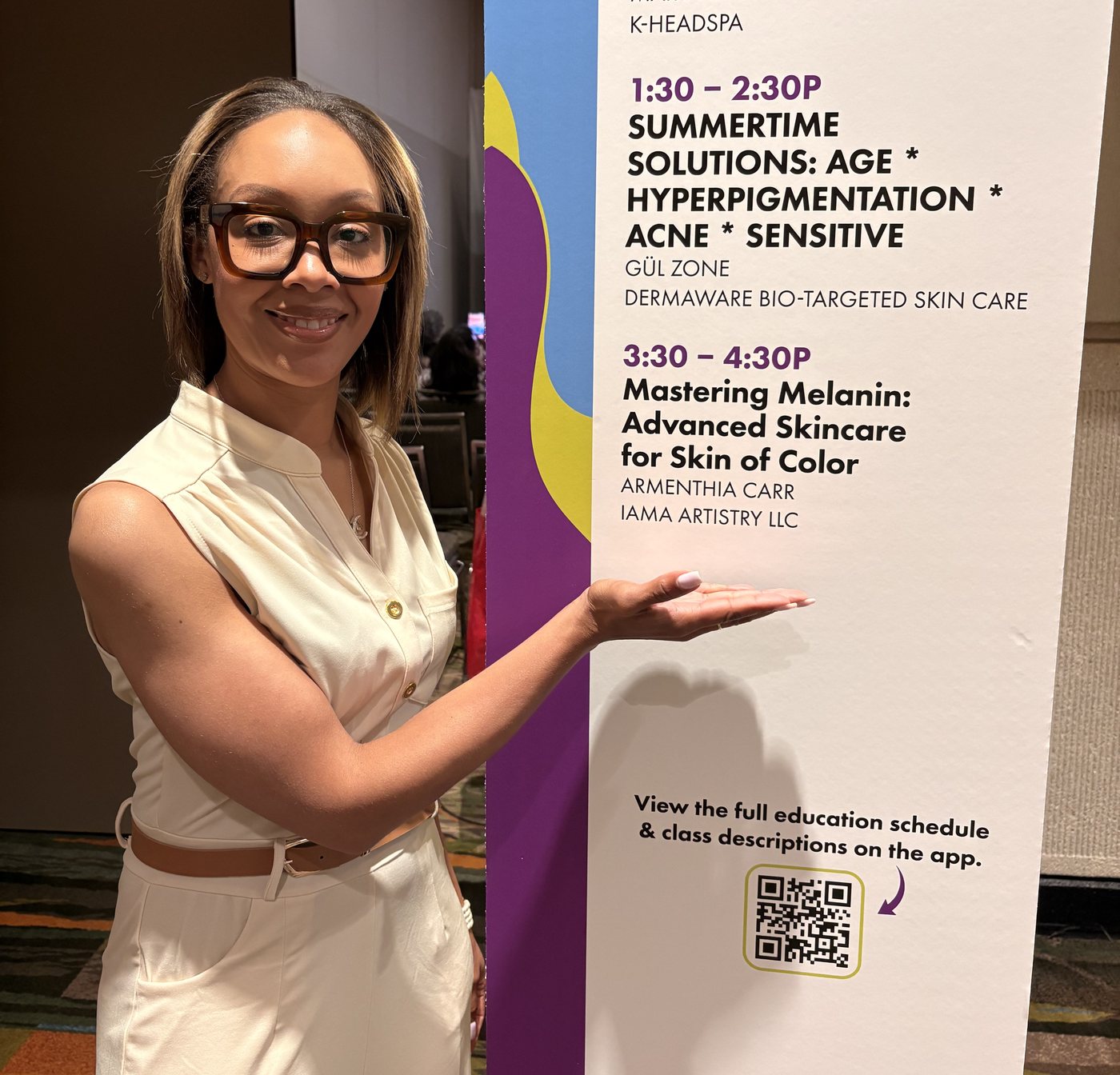
Every quarter, Carr runs what she calls her beauty school tour, introducing students to the device and showing them how a scan can support a thorough consultation. No state she is aware of requires a license to operate it, so students and other beauty professionals can learn to scan the skin, explain the results and recommend products within their permitted scope.
She also points out what it does not require: no bed, no towels, no wax pot, no back bar.